10-IX-1979.
Passed projective geometry. The first among the last three exams. After trying and failing to pass all three in june, I changed tactics and tack. One at a time, slower but firm.
The exam itself I don't remember at all - did I take the car or did I take an early bus, how was the weather, where did I eat (the written exam takes three hours in the morning, then a few hours for grading that, then oral for those who passed that, at rate of perhaps 3-4 people an hour, really takes all day). Nothing.
But I do remember learning for it. Almost whole august, while waiting for Go to be born and then while being often awake while they sleep, I was lying on the floor, on a tapestry that Oma wove, with light coming from the lamp on the writing desk. The photo-quasi-copied book was wrapped in a ring binder (which she got from the german side, and supplied me too during most of the last three years), which was then wrapped in a jeans sleeve with sewn-on handles. I was carrying that instead of a notebook since 2nd year. Even our indexes had such jeans wrappers, though I think those were made by me.
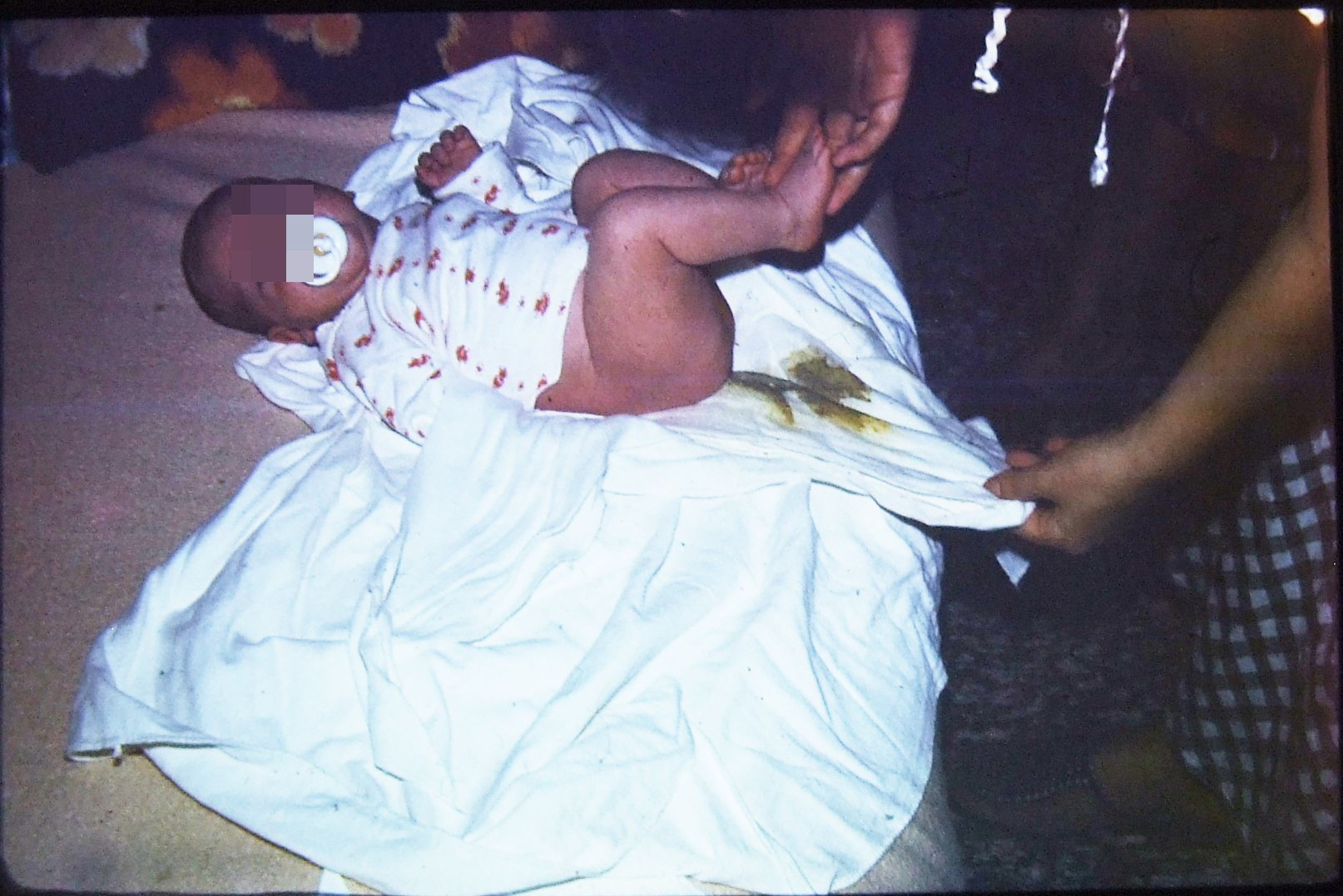
Diapers were cotton, smuggled from Romania, washed a lot
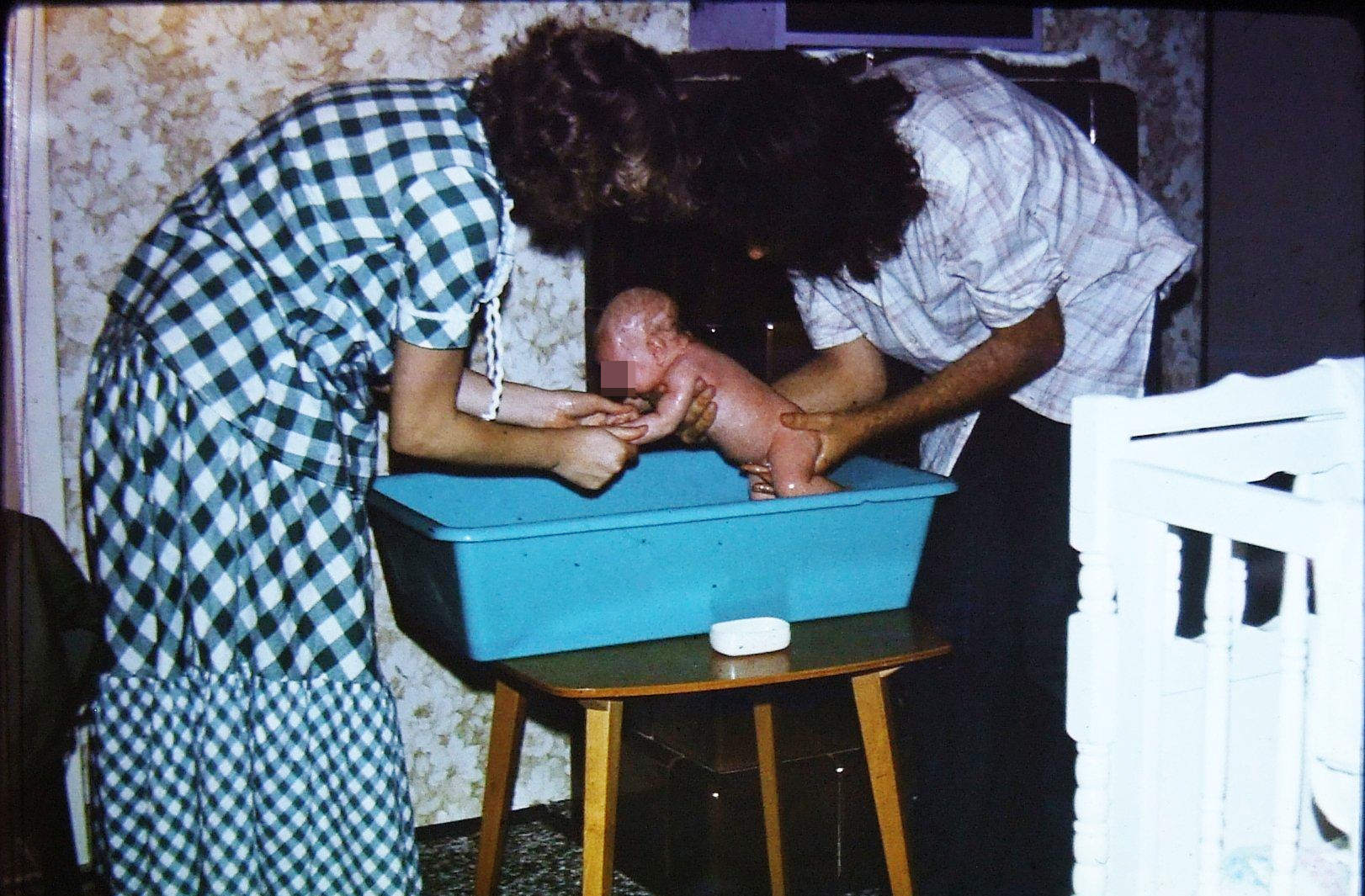
The baby bed held for 14 years. The terrace table, from the Rex chairs set, is still in use. The purple frame above my back is the left speaker.
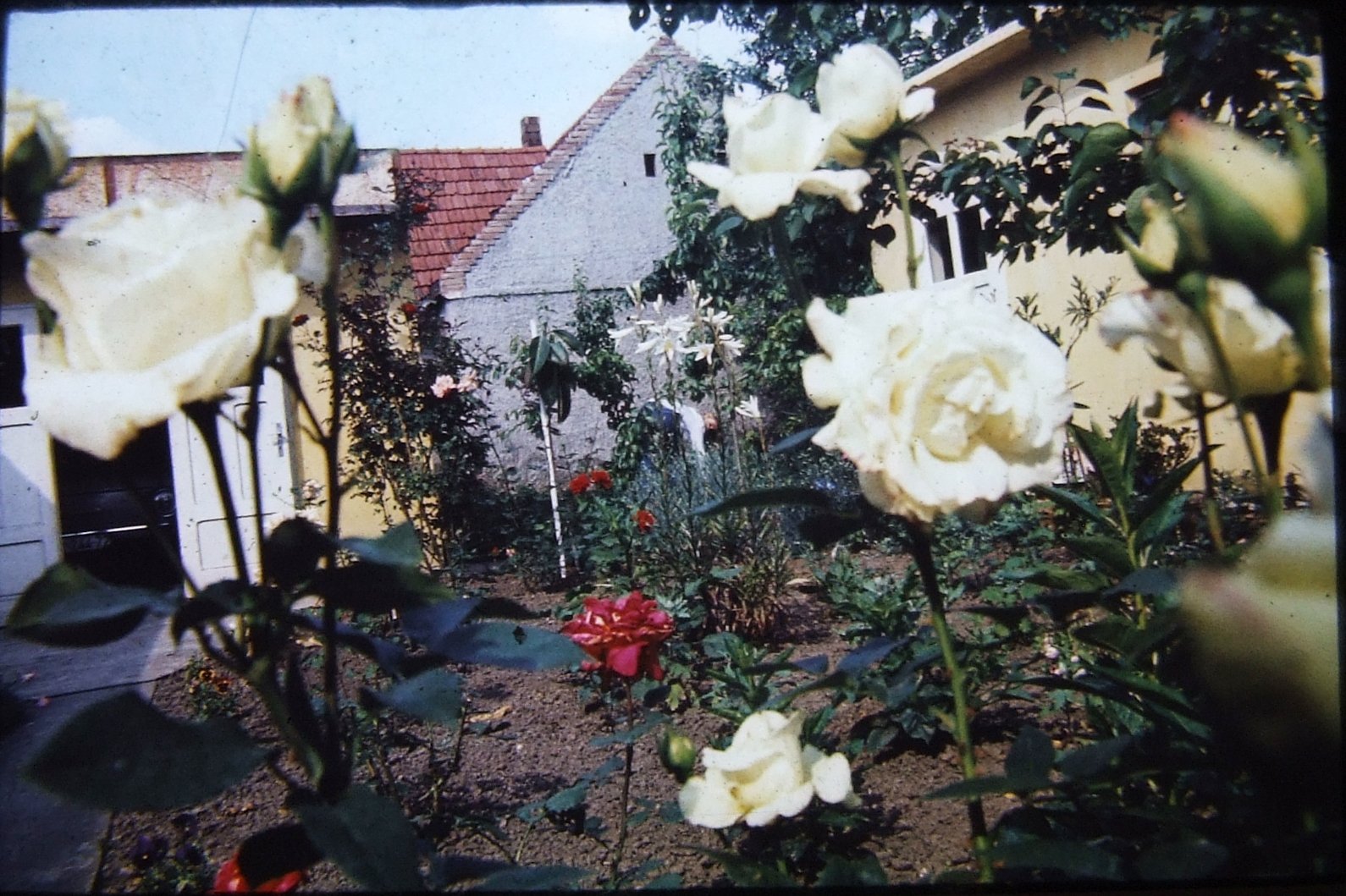
Granma kept the garden; dad did most about the roses
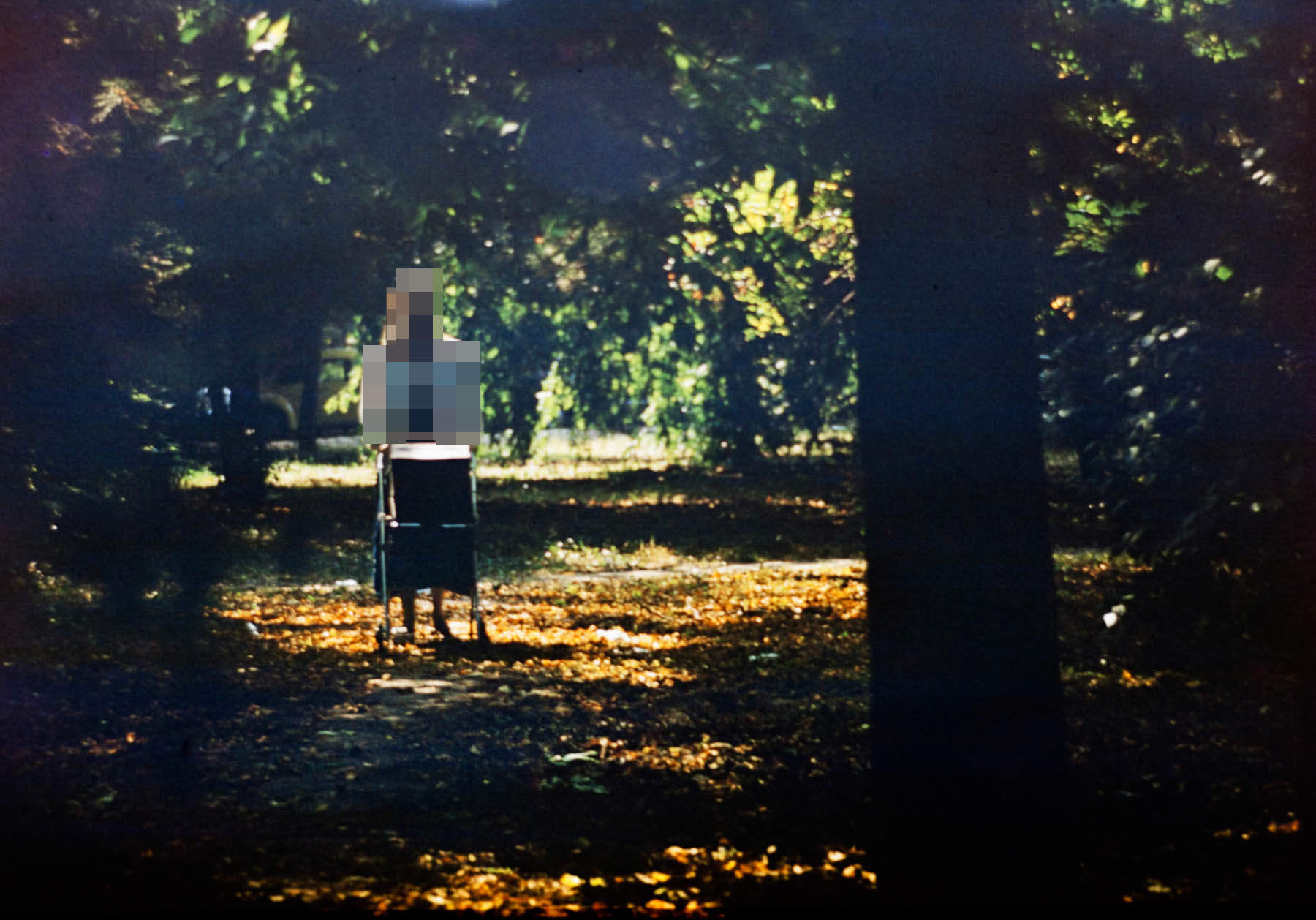
September is still pretty warm, and the park is just a block away.
The daily landscape was mostly like this.
We took Go regularly to the children's dispanzer for checkups, just to make sure she's fine. The procedure was like this: you first come up to the window of the file room (kartoteka - card-theque, where they keep the kartons (literally: cardboards), i.e. files). They pull it out, I guess by year and surname, and give it to you. Now whether they write your name on some waiting list for the next doctor or not, is a bit unclear now; twenty years later it was surely that way and probably automated, at this time they must have lined up a dozen names on a short list, which they would then carry to each doctor's room and then would start a new list. This is where I got into habit to register the data flow within various organizations, which later turned out to be handy in my work.
When it's our turn, the baby is already naked and perhaps shrouded in a diaper (one of those smuggled romanian things, pure cotton), so not to waste time. In the babies' waiting room there are changing tables, upholstered in some green vinyl, looking posh and clean and undestructible for a hundred years. When we get in, we pass the karton to the doctor, she (they were mostly women) reads it some, listens to the baby on the 'scope a bit, puts her on the scale a bit, write some into the carton, the nurse puts it on the stack to return to kartoteka later, and that's it, we leave the office, dress her up, get in the car and go home. Sometimes drop by the pharmacy to pick up whatever she prescribed. The meds cost next to nothing, there was some participation in the price for most of the stuff, but it was symbolic, less than a city bus ticket.
BTW, I was surprised to see that Linka was one of the doctors.
Once, waiting there, we started leafing through the karton - still quite empty - and found the word cuca as a remark somewhere. It didn't cross my mind that a nurse would write cyrillic (in which case it would simply mean „sisa“, i.e. she sucks) - it was known that chicks from the medical school all write latinic, as they have to learn lots of latin terms and switching alphabets so often is just difficult to them. We thought a cuca was some internal designation, circulated among the staff, and that apart from it they must have at least a dozen other words to designate types of babies. It stuck as a nickname, so we called Go Cuca at least next three years, until she grew out of the typology.
We did notice that it was actually cyrillic, upon seeing the same handwriting elsewhere, and „cuca“ in other handwritings as well, but that didn't sway us. The nickname stayed until it was obsolete.
Mentions: dispanzer, Gorana Sredljević (Go), Mira Dengin (Linka), Oma, in serbian
10-III-2020 - 31-X-2025