milk
Most people buy industrial, pasteurized milk. The usual grades are 1,8%, 2,8% and 3,2%, though that doesn't guarantee anything but fat content. There were cases when dairy plants would skim it down to 1% and then supplant the rest with margarine. Or not - in the nineties it was possible to buy 1,4% labeled as 2,8%.
Until some time in the seventies the milk was packaged in reusable classic milk bottles (and so was yoghurt, in half liter bottles) with tin foil lids. Then homogenized milk in tetrapak was introduced (again, larger 1l pack for mili, 0,5l for yoghurt), and by mid-eighties they started making brick shaped packagings too, which are still out there, now in dozen different shapes.
In parallel with that development, a bag was also invented. Though not in Yugoslavia only, I've seen it in Hungary as well, so it's probably more widely popular in the area.
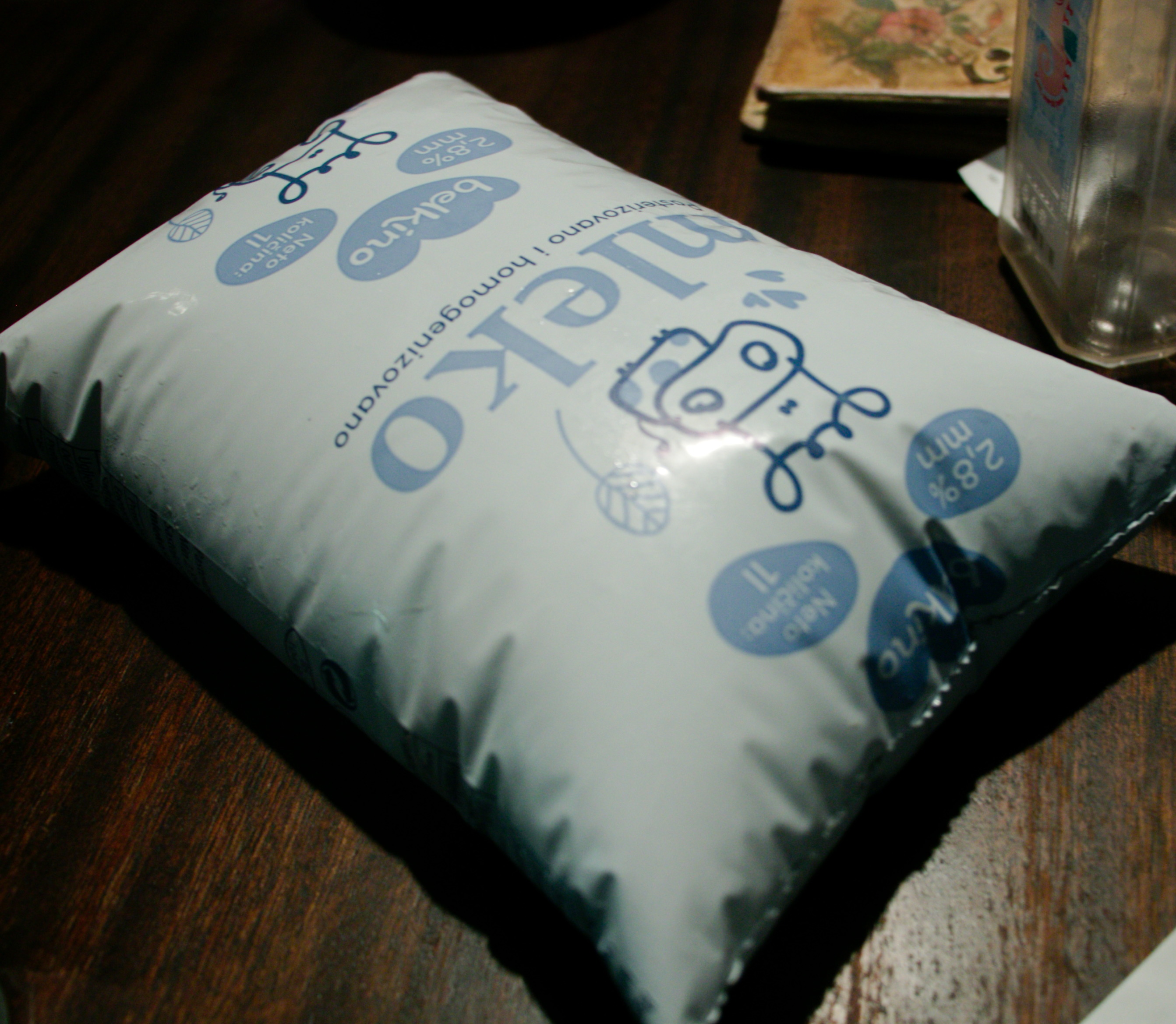
You can still buy the milk straight from peasants, though it doesn't make sense to get in a car and drive to a village. It's the other way around - a group of farmers would organize delivery. The price is about the same as for industrial milk, only it's raw and often far above the 3,2% mark, no cheating.